
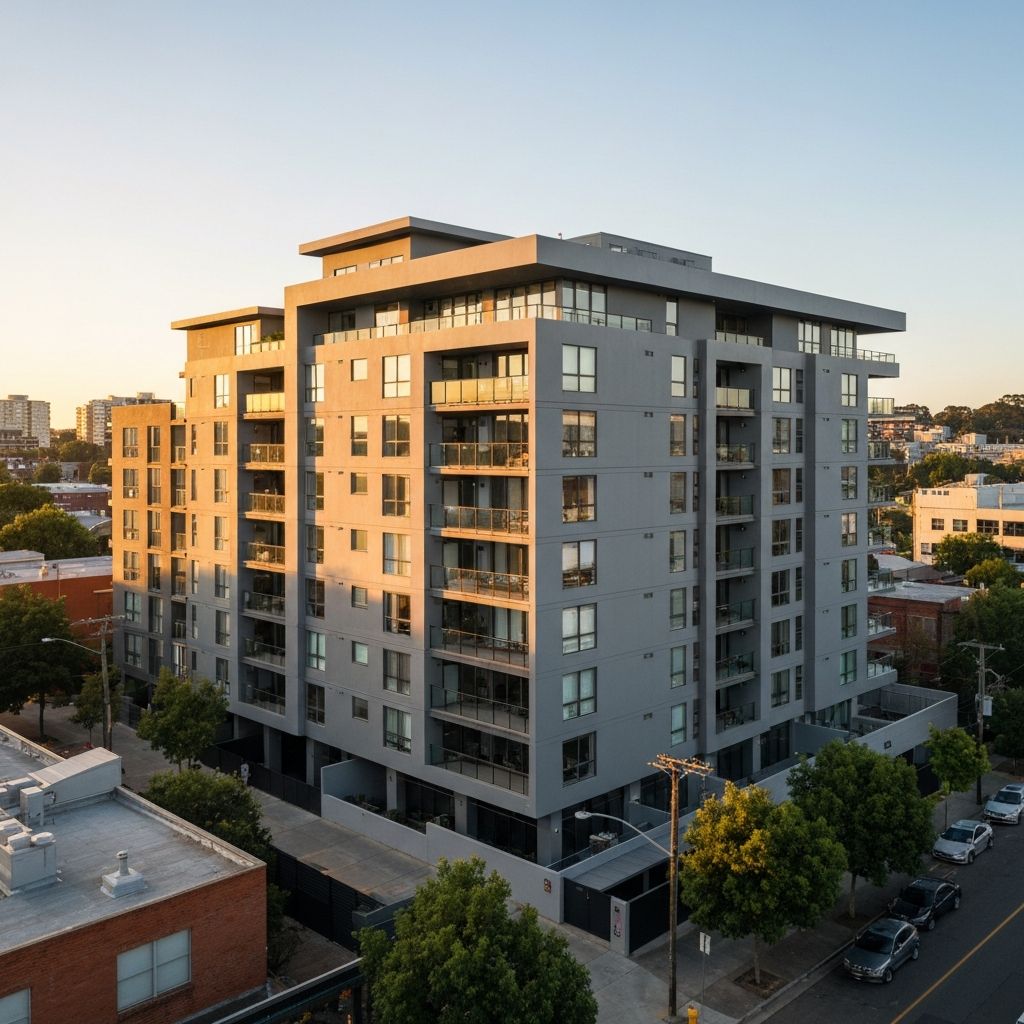
Build Wealth Through Real Estate in Ontario
Finance your investment property portfolio with competitive rates. From single-family rentals to multi-unit buildings, I help investors succeed.
Investment Property Financing in Ontario
Real estate investment has long been one of the most reliable paths to building wealth in Ontario. With strong population growth, limited housing supply, and steady rental demand in cities like Toronto, Hamilton, Ottawa, Kitchener-Waterloo, and London, investment properties continue to offer attractive returns for savvy investors.
However, financing investment properties differs significantly from owner-occupied home purchases. Higher down payment requirements, different qualification rules, and the need to analyze cash flow make expert guidance essential. As a mortgage agent specializing in investment properties, I help investors navigate these complexities and find financing that supports their wealth-building goals.
Whether you're buying your first rental property or expanding an existing portfolio, I provide personalized strategies to maximize your purchasing power and return on investment.
Types of Investment Properties We Finance
Single-Family Rentals
Detached homes, semis, and townhouses rented to single tenants or families. Often the easiest entry point for new investors with straightforward management.
Multi-Unit Properties (2-4 Units)
Duplexes, triplexes, and fourplexes offer multiple income streams. Can qualify as residential (easier financing) while benefiting from diversified tenant base.
Condominiums
Condo units as rentals offer lower entry costs and minimal maintenance responsibilities. Popular in urban markets with strong tenant demand.
Vacation/Short-Term Rentals
Properties for Airbnb or vacation rentals in tourist areas. Financing available with specific lenders who understand short-term rental income.
Down Payment Requirements
Non-Owner Occupied Investment Properties
- • Minimum 20% down payment required
- • No CMHC insurance available for pure investment properties
- • Higher down payments (25%+) may qualify for better rates
- • Down payment source must be verified (savings, HELOC, gifted equity)
Owner-Occupied Investment (House Hack)
- • As low as 5% down if you live in one unit
- • Available for properties up to 4 units
- • CMHC insurance applies (added to mortgage)
- • Must intend to occupy as your primary residence
- • Excellent strategy for first-time investors
Down Payment Strategies
- • HELOC from primary residence: Access home equity for down payment
- • Refinance to invest: Pull equity from existing properties
- • Gifted equity: If buying from family below market value
- • Vendor take-back: Seller provides part of financing (rare)
How Investment Property Qualification Works
Investment property qualification considers several factors beyond owner-occupied purchases:
- Debt Service Ratios: Your GDS/TDS ratios include your existing mortgage payments plus the new investment property costs, offset by rental income.
- Stress Test: You must qualify at the higher of your contract rate +2% or the benchmark rate (currently 5.25%), applied to all mortgages.
- Net Worth: Lenders may require minimum net worth, especially for larger portfolios or higher-value properties.
- Property Cash Flow: The property's ability to generate positive (or near-positive) cash flow is considered.
- Credit Score: Investment properties typically require 680+ credit for best rates; 620-680 may still qualify with alternative lenders.
Using Rental Income to Qualify
Add-Back Method
50% of gross rental income is added to your qualifying income. This is the most common method used by major lenders.
Example: $2,000/month rent = $1,000/month added to income
Offset Method
Rental income offsets the property's carrying costs (mortgage + taxes + heat/condo fees). Some lenders use 80% of rent for this calculation.
Example: $2,000 rent offsets $1,600 of property costs
Rental Income Documentation
- • Existing tenants: Signed lease agreement showing rental amount and term
- • Vacant properties: Appraiser provides market rent estimate based on comparables
- • Existing landlords: T776 tax forms and rental history strengthen applications
- • Pro tip: Properties with existing strong leases can qualify for more financing
The Investment Property Mortgage Process
Investment Strategy Consultation
45 minDiscuss your investment goals, risk tolerance, and target markets. Determine your purchasing power and optimal property type.
Pre-Approval & Purchasing Power
2-3 daysGet pre-approved showing the maximum investment property value you can finance. Understand how rental income will be factored.
Property Search & Analysis
VariesWork with your real estate agent to find properties. I can help analyze cash flow projections for potential purchases.
Mortgage Application
2-3 daysSubmit your full application once you have an accepted offer. Provide property details, lease agreements if applicable, and required documents.
Appraisal & Rental Analysis
5-10 daysLender orders appraisal including market rent assessment. This determines the property value and qualifying rental income.
Approval & Closing
Closing dayReceive final approval, complete legal work, and close on your investment property. Start building your rental portfolio!
Investment Strategies We Support
House Hacking
Live in one unit of a multi-unit property while renting others. Qualify with as little as 5% down while building equity and rental income experience.
BRRRR Strategy
Buy, Rehab, Rent, Refinance, Repeat. Purchase undervalued properties, renovate to increase value, refinance to pull out equity, and repeat with next property.
Buy and Hold
Long-term wealth building through property appreciation and mortgage paydown. Focus on stable, cash-flowing properties in growing markets.
Portfolio Building
Systematically acquire multiple properties over time. I help investors navigate financing for their 2nd, 3rd, 4th+ properties.
Value-Add Investments
Properties with below-market rents or improvement potential. Finance the purchase, then refinance after increasing property value or rents.
Important Considerations
Cash Flow Analysis
Don't rely solely on appreciation. Analyze all expenses including vacancy, maintenance, and property management. Aim for positive or near-positive cash flow.
Reserve Funds
Maintain 3-6 months of expenses in reserve for vacancies, repairs, and unexpected costs. Lenders may require proof of reserves.
Insurance Requirements
Investment properties require landlord insurance, which is more expensive than homeowner insurance. Factor this into your cash flow projections.
Tax Implications
Rental income is taxable. However, many expenses are deductible. Consult with an accountant about depreciation, expense deductions, and tax planning.
Property Management
Decide if you'll self-manage or hire a property manager (typically 8-10% of rent). Factor this into your numbers before purchasing.
Real Investment Property Scenarios
First-Time Investor: House Hack
Jordan, 28, wanted to start investing but only had $40,000 saved. Instead of buying a single-family home, he purchased a $550,000 triplex in Hamilton, living in one unit and renting two. With just 5% down ($27,500) plus closing costs, the two rental units ($1,400/month each) cover most of his mortgage. He's building equity while paying minimal housing costs.
Down payment: 5% ($27,500) | Rental income: $2,800/month | Net housing cost: ~$400/month
Portfolio Expansion: Second Property
Lisa and Raj own their $800,000 home with a $400,000 mortgage. They took out a $200,000 HELOC against their equity and used $130,000 for a down payment on a $650,000 rental condo in Mississauga. The rental income ($2,500/month) covers the condo's mortgage and expenses plus the interest on the HELOC portion used. They now own two appreciating properties.
HELOC used: $130,000 | Rental income: $2,500/month | Cash flow neutral while building equity
BRRRR Strategy Success
Alex purchased an outdated 4-unit property in London for $600,000 with 20% down ($120,000). He invested $60,000 in renovations, increasing rents from $4,000 to $5,600/month total. The property appraised at $850,000 after renovations. He refinanced at 75% LTV ($637,500), pulling out more than his original investment to use for the next property—all while owning a cash-flowing asset.
Initial investment: $180,000 | Refinanced amount: $637,500 | Monthly rental increase: $1,600/month
* These scenarios are illustrative examples. Actual results vary based on market conditions and individual circumstances.
Frequently Asked Questions
Ready to Invest in Real Estate?
Get expert guidance on financing your investment property. Free consultation for investors.
Related Mortgage Solutions
Ready to Get Started?
Take the first step toward your mortgage goals. Apply online, call us, or book a free consultation.
Mortgage Agent Level 2 (M23005389) | Best Mortgage Loans Inc. #12625
Investment property financing involves risks including market fluctuations and vacancy. This information is general in nature. Contact us for personalized guidance based on your specific investment goals.